The National Archives
Control over your own IT infrastructure
Together with Redpill Linpro, the National Archives of Norway has built a new platform based on open technologies, with greater freedom to decide how the infrastructure should be developed and used.
The National Archives manages and makes available large amounts of information that must be preserved over a very long period of time. This places special demands on the infrastructure on which the data and services rely.
Changes to the previous Nutanix platform gave the National Archives an opportunity to assess whether the solution still met its needs.
– We felt that we did not have the control over technology choices and update pace that we wanted. So we stopped and considered alternatives. The combination of cost and control was what proved decisive for us, says Lars Olafsen, Department Director for IT Services at the National Archives.
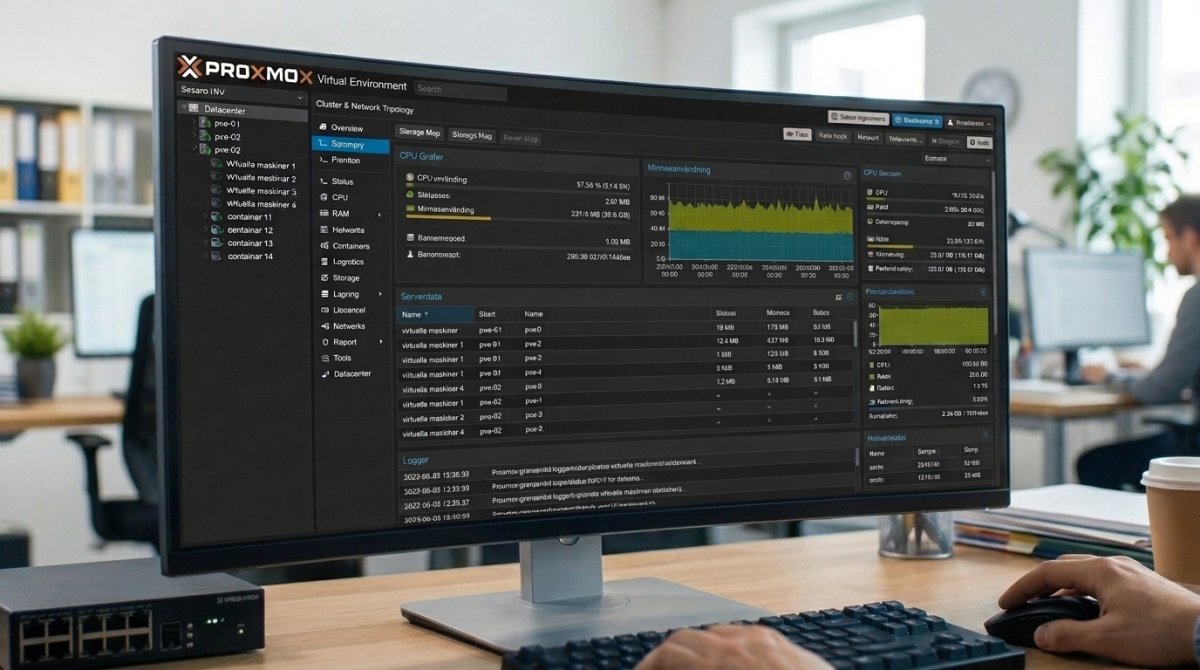
The choice fell on a new infrastructure platform based on open technologies. Proxmox forms the central virtualization platform, while the container-based infrastructure is based on Kubernetes running on Talos Linux. Cluster API is used for orchestrating clusters.

Control over vendor lock-in
For the National Archives, the goal was not necessarily to find a platform that was better than the old one in every respect. The gain lies first and foremost in greater control and flexibility.
On the new platform, the National Archives can itself control which versions of Kubernetes they run and when they update. At the same time, they gain greater freedom in choosing hardware and can to a greater extent reuse equipment they already have. The increased flexibility also makes it easier to establish new services as needs change over time.
– Open technologies give us control. For us, it is about digital sovereignty, both over our data and the infrastructure it resides on. We believe it is important to have ownership of our core systems, to understand them, and to have competence in them ourselves, says Olafsen.
This also makes it easier to change course as needs evolve. At the same time, the National Archives wants to build and retain expertise in its core systems in-house, rather than being tied to the solutions and licensing models of a single vendor.
Redpill Linpro came in through the National Archives' framework agreement for IT consultants. The assignment covers both operation and further development of the existing infrastructure and the work on the new platform. Work on the platform began in 2024, initially with one consultant. Over the past year, three consultants from Redpill Linpro have worked full-time on the assignment.
Rather than establishing the solution outside the organization and handing over a finished product, the consultants work as an integrated part of the National Archives' own infrastructure team. They take part in operations meetings and standups, among other things, and work largely on-site at the customer.
For Lars Ødegaard, customer manager at Redpill Linpro, this way of working is important.
– We do not want to deliver a black box that the customer becomes dependent on us to operate. We will contribute our specialist expertise where it is needed, while developing the solution together with the National Archives' own people. The goal is for them to be left with the solution, the knowledge and the control themselves, says Ødegaard.
Olafsen points to the same effect from the customer's standpoint.
– The consultants from Redpill Linpro are an integrated part of our team and solve tasks together with our own people on a day-to-day basis. This gives us access to specialist expertise, but also continuous knowledge transfer. Ownership of the platform lies with the National Archives, and we use external parties to become better ourselves.
Skills development also goes both ways. The work has given Redpill Linpro's consultants practical experience with, among other things, establishing Proxmox in an operational environment and combining the platform with Kubernetes, automation and other open technologies.
The new platform is production-ready, but the migration is happening gradually. Parts of the National Archives' environment still run on the old platform, while the goal is that the new solution will eventually become the foundation for most of the infrastructure.
At the same time, the infrastructure must be able to evolve in step with new computing needs. Dedicated GPU servers are already part of a separate Talos cluster.
For Olafsen, this ties into the same principle that lay behind the modernization from the start: control.
"We have a lot of data stored locally, and it makes sense to process the data where it resides. GPU capacity has therefore become part of what the platform must be able to offer. Going forward, the plan includes building better support for running local language models," says Olafsen.
Client: The National Archives of Norway
Supplier: Redpill Linpro
Project start: 2024
Assignment: Operation and further development of existing infrastructure and establishment of a new platform
Technology: Proxmox, Kubernetes on Talos Linux, Cluster API, Ansible, SaltStack and Terraform
Databases: MariaDB/Galera Cluster and PostgreSQL
AI/GPU: Dedicated GPU capacity, with plans for better support for local language models
Status: New platform is production-ready and the migration is taking place gradually
Next case:
Brønnøysundsregistrene
A state-of-the-art container platform