11247

How do you know if you are API ready? - Try our API Maturity analysis

The API Ready concept is designed to assist you in every aspect of your API initiative. That raises a couple of interesting questions – How do you know if you are API ready and how mature your API initiative really is?

This is why we decided to create a model to help organizations determine where in the API ready cycle their initiatives are. To keep it simple we decided to brand it ”The API Maturity Model”.


The API Maturity Model

The Maturity model corresponds to the steps in the Ready model. For each step we have designed a number of questions and assumptions of what needs to be done in order to launch a full API initiative taking all important aspects into consideration. Based on the answers to these questions and a judgement from one of our API specialists, we give our customers feedback ”traffic light style”.

Traffic light style means that within each area, the measures taken and work done is colour labeled ranging from green to yellow and red. Maybe the encoding of the colors is obvious, but in short it means that if the step is given a green light, we judge that sufficient work has been done to ensure success in this area of the API initiative. A yellow light means that we are on the right track, but not quite there yet and a red light means that additional work, thinking or design needs to be done in order to be fully prepared for an API launch.

The API Maturity model is not intended to be a full coverage analysis on your API initiative nor a thousand hour consultancy assignment that produces loads of documentation, it is just intended as a tool to help you decide where in the process you are and which areas you need to develop to ensure API success. The analysis will be delivered at a fixed price and the ”traffic light style” indicators will give you guidance on which areas to improve to ensure a successful API initiative.


How does it work?

The Maturity model starts with some important questions on your API strategy.

  • Have you considered what you want to achieve with your API initiative?
  • Who is your intended audience?
  • What data do I want to expose?
  • ...etc.

Maybe your primary objective with the API initiative isn't to reach an external audience, but rather to create a facade to increase control on internal APIs and integration? The latter gives other pre-requisites and things to consider than if your audience is external.

The next step in the analysis is to do a review on the design of the APIs and here the questions can be along the lines of...

  • Are they designed in a way that makes it easy for the targeted audience to find the intended information?
  • Is the information presented in a tasteful manner,
  • Is it designed for maintainability?
  • ...etc.


The Maturity model continues on to cover areas such as:

  • DevOps (how to handle deploys of APIs, versioning)
  • Visualization (have I managed to design and describe my APIs in an useful way for my target audience)
  • Security (have we taken enough steps to prevent security related issues and misuse).
  • Test (have we ensured that the APIs are being tested properly).
  • Monitoring (who is using our APIs and to what extent.)
  • Infrastructure (throttling, usage, publication).

Within each area, your API initiative will be given a green, yellow or red light to help you point out sections that need further attention.

The API Maturity model has been tested with some of our customers involved in API initiatives with a very positive feedback. We look forward to use it in more cases to support new API initiatives and to kick them off in the right direction. 

Looking forward to connect with you on your API initiative!

Other API Ready posts:

Other API resources

Contact me
The contact details you have provided in connection with this service will be used to contact you with further information. Learn more about how we handle your personal information here.
 
 I've read and accepted the privacy-policy

Did AI Kill Low-Code Platforms?

For years, low-code iPaaS platforms promised a revolution: fast implementation, citizen development by non techies, and seamless integration. Platforms like Boomi, Lobster, and MS LogicApps were heralded as the key to empowering non-developers and accelerating digital transformation. However, as AI-powered development tools evolve, the low-code promise is beginning to falter. 

Rising costs, vendor lock-in, and scalability limitations are forcing companies to reconsider their options. Could AI-assisted coding on open-source platforms and cloud functions be the better alternative?

The Low-Code Promise - and Its Pitfalls

Low-code platforms market themselves as the bridge between business and IT. They offer drag-and-drop interfaces, pre-built connectors, and visual workflows that enable rapid application development. The idea is that business users can build solutions with minimal developer involvement, reducing IT bottlenecks and accelerating digital initiatives. 

However, reality often falls short of the promise. As highlighted in Martin Fowler’s article, “You Can’t Buy Integration”, pre-packaged solutions often fail to handle real-world complexity. Many low-code platforms struggle with: 

  • Rising Costs: Licensing fees for low-code platforms have skyrocketed, especially as businesses scale. What starts as an affordable entry-level solution can quickly become a major expense. 
  • Vendor Lock-In: Once applications and integrations are built on a low-code platform, migrating away can be extremely difficult. Businesses find themselves tied to specific ecosystems, limiting flexibility and innovation. 
  • Customization Challenges: While low-code enables rapid prototyping, it often lacks the depth needed for complex workflows. Companies frequently hit roadblocks where custom coding is required - negating the original speed advantage. 
  • Integration Limitations: Many low-code platforms offer built-in connectors, but as Fowler points out, integration is more than just connecting systems. True integration requires adaptability, which low-code platforms often struggle with. Even more, when the connector fails, it is often a black box that is difficult to troubleshoot.

AI-Powered Development: A Faster, More Flexible Alternative

Enter AI-driven development. With generative AI and automated code assistants, developers can now achieve the same—if not better—speed as low-code platforms without the associated downsides. How? 

  • AI Handles the Heavy Lifting: Tools like GitHub Copilot, ChatGPT, and cloud-based AI services can generate boilerplate code, suggest optimizations, and even write complex functions, significantly reducing development time. Especially Claude.AI is right now our favorite AI to help building integrations and the platform engineering around it. 
  • Open-Source Freedom: Instead of being tied to a single vendor’s platform, companies can leverage open-source frameworks or cloud-native functions (e.g., AWS Lambda, Azure Functions, Google Cloud Functions) for full control over their solutions. The point is to build the integrations in languages like Java, .Net or other languages than can run anywhere – even in your own container orchestration platforms like Kubernetes or OpenShift, which run on your chosen cloud infrastructure. 
  • Lower Costs: Without expensive licensing fees, businesses can allocate resources more efficiently. Cloud-based pay-as-you-go models and open-source tools drastically reduce financial overhead. One key point is, if it still were true that you could build faster and cheaper using low code what good is that if the solution you build will run unaltered for a long time. Build cheap and run expensive – that does not compute 😊 
  • True Integration: AI-powered code can be tailored to specific needs, ensuring better long-term maintainability and interoperability compared to rigid low-code connectors.

The Verdict: AI Over Low-Code?

Low-code platforms aren’t dead, but they are losing their edge. Businesses looking for speed, flexibility, and cost-efficiency should increasingly turn to AI-assisted coding rather than proprietary low-code solutions. The future belongs to those who combine AI automation with open-source or cloud-native pro-code architectures, freeing themselves from vendor lock-in and unlocking true innovation. 

The question isn’t whether AI killed low-code platforms—it’s whether businesses are ready to embrace the next evolution in software development.

Claiming the title: Thought-leaders of API & Integration in Scandinavia

Since we started working with integrations back in 2006, and ever since we have set an honor in making sure that our offering and delivery related to connectivity is current and up-to-date with the leading strategies and methodologies.

This is why we where early with assisting customers to implement agile ICCs to deliver SOA in the late 2000’s and also why we introduced a way to API led connectivity through API Ready and Digital Ready models in the 2010’s. Backed by these learnings and experience from numerous advisory and implementation projects related to API & Integration, we have now decided to label ourselves as ”The Thought Leaders of API & Integration” in Scandinavia. 

So what does this mean? 

Investments in knowledge

Well – to us this means that we will put additional pressure on ourselves to make sure that we really deliver on this statement. This means that we will have to continue investing in knowledge and making sure that we keep an open eye on the surrounding world to discover and analyse trends related to API & Integration. It means that we will reserve time for our consultants to make sure they are educated on the very latest architectural advices and methodology.

It also means that we put a requirement on our consultants to stay up to date with these latest findings and being true advisors to our customers. It further puts a requirement on our consultants to ensure that customers of Redpill Linpro have access to current offerings and the best advice to build efficient connectivity solutions to support digital initiatives such as AI implementation, data analytics, citizen services, open data, customer 360 views or whichever use case that are top of customers minds.

We will entertain this through internal competence sharing, cross border knowledge groups, conference participation or other activities required to act as our customers best advisors in this domain.

Innovative delivery models

Another mean to stay current with what customers require when it comes to connectivity is to ensure that delivery models are aligned with customer expectations. For this purpose, we will constantly challenge ourselves and the way we deliver our services in the API & Integration domain.

Just as we where early adopters of the Scrum methodology to support implementations of agile ICCs, we will continue to evaluate innovative ways to deliver service to fuel our customers digital innovations with flexible access to data.

Current connectivity related delivery models include our ”Integration as a Service” offering that can be utilised together with various platforms as well as our Open Source based iPaaS offering hosted out of our Nordic Cloud Center (RLNC). With models like these, we will ensure to always be flexible and meet the demands and situation of each specific customer.

Platforms

Another consequence of making the statement as ”The Thought Leaders of API & Integration” in Scandinavia, is that we must be able to support customers on a number of different platforms for connectivity. Through experience we know that there is not a ”one platform to suit all” option available. Modern connectivity platforms often have a similar set of capabilities to support integration use cases. There are of course a large variation to these platforms when it comes to deployment options (Cloud, On prem or Hybrid), access to source code (Open Source or proprietary code), programming language, basic structure and of course pricing structures.

Working in a large number of industries, tech environments and organisational structures, we know that different platforms fits with various requirements. We want to be able to support our customers with their connectivity journeys no matter which platform they choose. To support this, we have decided to enter into new partnerships with platforms that we believe will fit with some customers requirements for various reasons. Among other partner platforms, these include Azure Integration and Workato.

To support these partnerships and implementations, we have also recruited leading architects and platform experts to ensure that customers that decides to use these platforms will also get their best advice from Redpill Linpro.

Followers of the Redpill Linpro company might ask why we have decided to partner and work with these particular platforms, as they are not Open Source? The answer takes us back to the headline of this blog post. If we want to be true thought leaders within API & Integration for Scandinavia, we can not limit our offerings and delivery to just a certain number of platforms. These platforms fits with the requirements of some of our customers and therefore we will also be able to support these customers with our knowledge, experience and delivery models.

More on API & Integration

If you want to know more about our offerings, ideas and delivery models for efficient connectivity, don’t hesitate to contact me or any of my colleagues. Maybe an API Maturity analysis would be a good way to get started for your organisation also?

The IAM strategy and aspects

Before choosing a solution for your IAM needs, or updating the one you have, you need to take a step back and think about what your needs really are. What is your IAM strategy and what are the important aspects for your organisation? Do you really have an IAM strategy?
IAM strategy and aspects

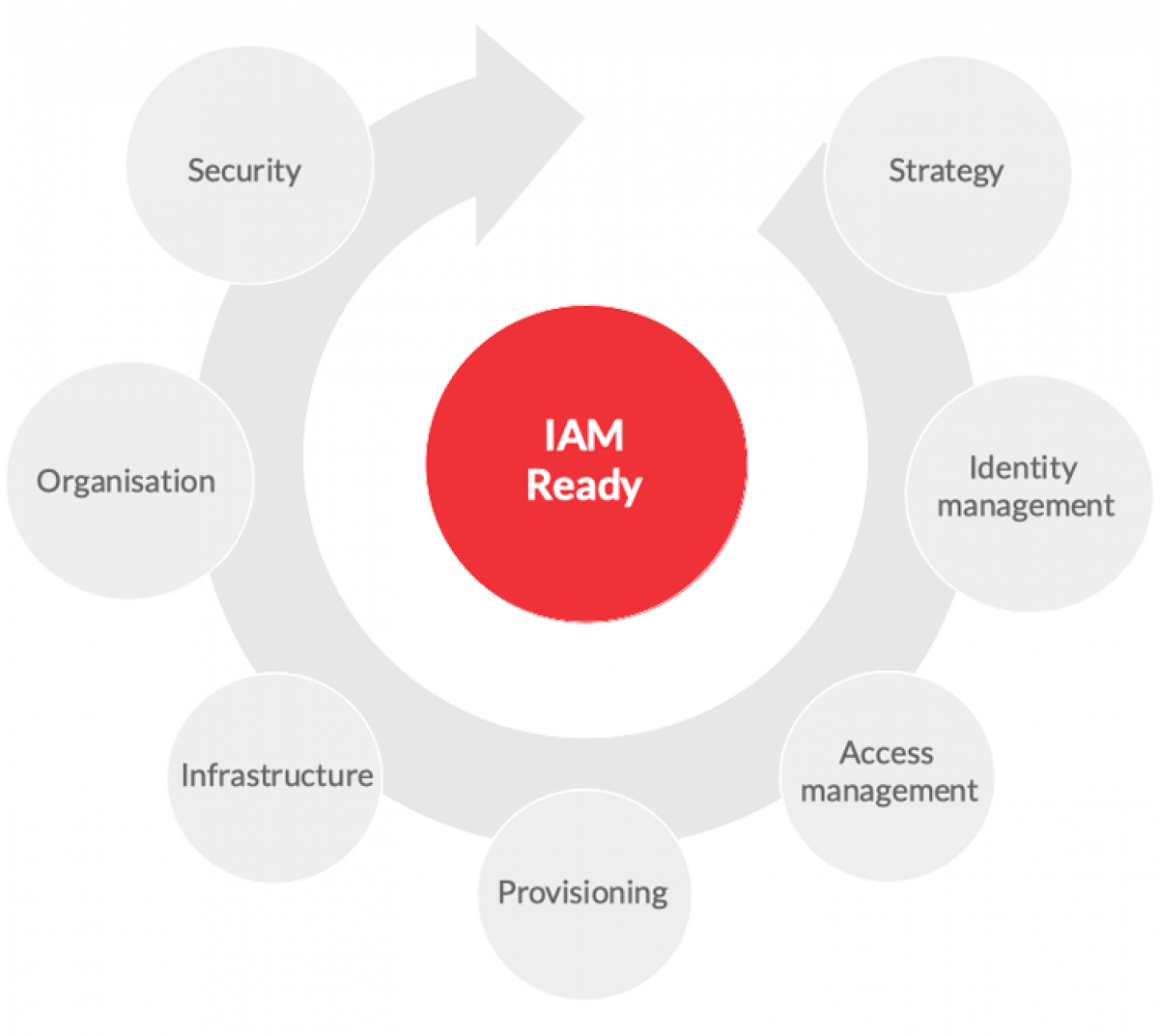
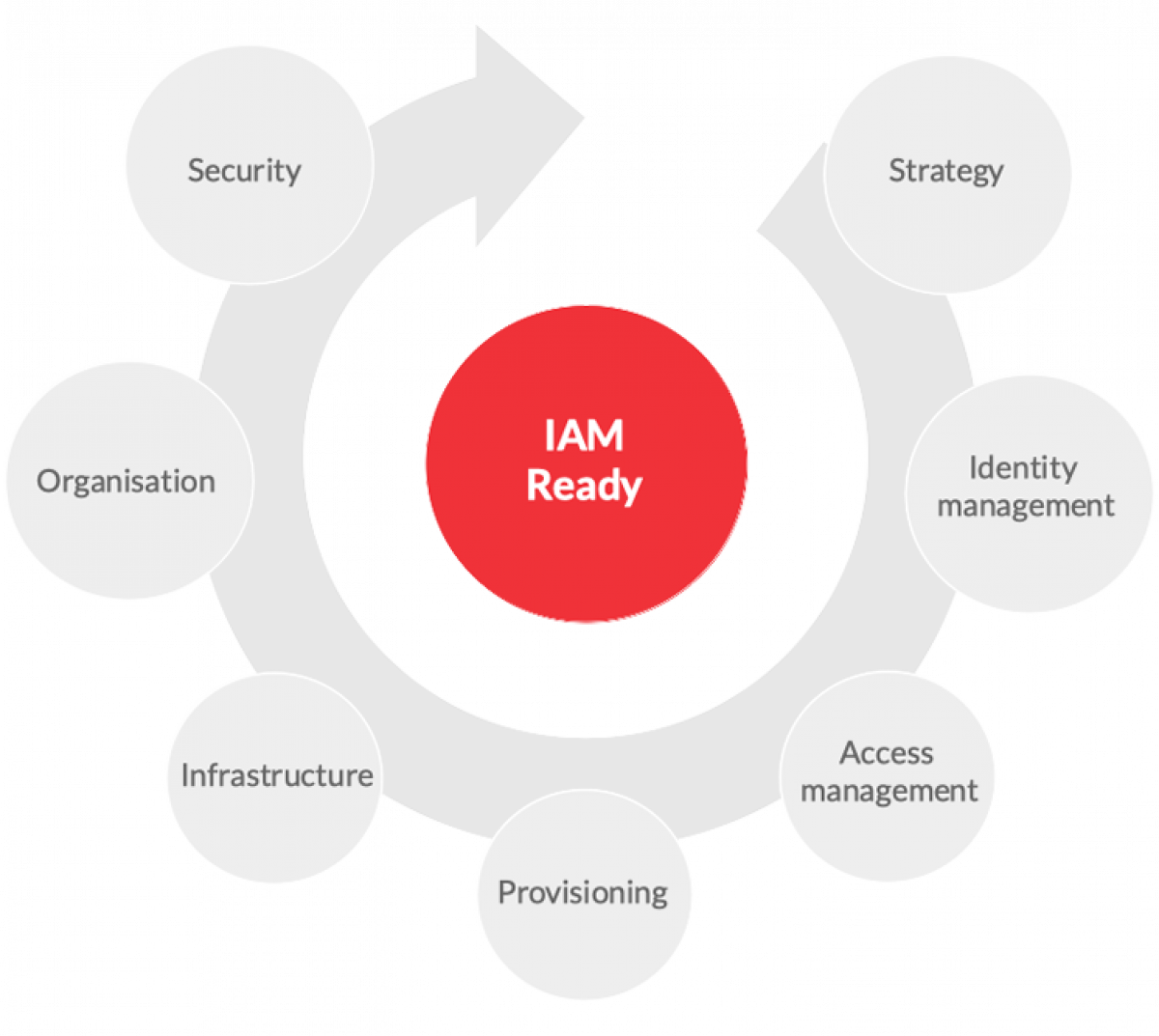
The figure above represents the Redpill Linpro IAM Ready model we use when assisting customers with IAM needs. It represents our hard earned real life experiences and by using it we verify that important aspects aren't ignored or forgotten.

The figure shows the steps for finding your IAM solutions and what aspects you need to consider to make sure you fulfill your IAM needs. Each section of the model is outlined below:

Strategy

As proven many times before; Without a clear strategy, you will make more mistakes, often miss your target and you will be unable to make nessessary decisions. Some key components of your IAM strategy should be:

  • Identity, user groups (external/internal) and user group segmentation
  • Authentication, authorization, federation and access control
  • Structure, integrations, asset protection and credential management
  • Identity lifecycle management
  • Risks, security awareness monitoring and oversight
  • Liabilities, compliance, governance and SLAs
  • Ethics, employee training, organization
  • And finally; Platform, systems, cloud/on-prem/SaaS for your IAM solutions

As you can see; the strategy provide the overview and represents the guiding principles for the other areas (like identity management and security), but will also provide many important guidelines going forward. The strategy will keep the rest of your assessment together, set the tone and be the "red line" or compass when making descisions and taking action for your IAM solutions.

To be successful with your IAM initiative, you will also need to make sure that the strategy is anchored with and supported by your executive management. Without proper backing by management, it will be hard to implement decisions and get organisational support for your initiative. Remember that implementing new principles for identity management often also requires buy in from the organisation.

With a clear and undisputed sponsorship from the adequate management level makes this process a lot easier. 

Identity management

Identity Management (IDM) is a fundamental component of your IAM project. IDM refers to the processes, methods and tools used to manage digital identities for individuals, entities, and devices within your digital ecosystem. The primary goal of IDM is to ensure that the right individuals (entity), have appropriate access.

This step of your IAM Ready initiative is also about SSO, MFA, federation, governance, content, biometrics, secrets, credentials and (dont forget) identity lifecycle management.

Access management

While Identity Management (IDM), focuse on managing digital identities and their attributes, Access Management is about controlling and regulating the access that these identities have to resources within your IT and digital environment.

It ensures that appropriate permissions are granted for access to specific resources, while enforcing security policies and compliance requirements. In this step of the assessment you will also establish what standardes to use, such as: Basic auth, mutual TLS, certificate usage, oauth2, SAML, open-id connect, Kerberos, etc. 

Are you only using standards? Or are you relying on proprietary accesses from from the likes of external providers, such as BankId or AppleID.

Provisioning

Provisioning is the process of granting, managing, and revoking access rights and permissions to various resources (such as systems, applications, databases, and more), for users within an organization. It is a crucial component of IAM because it ensures that appropriate access is given to resources, while the security and compliance remains. Some key aspects of provisioning is

  • User On-boarding/Off-boarding
  • Access Management
  • Automation of provisioning
  • Compliance with regulatory requirements and internal security policies

Infrastructure

The IAM infrastructure are foundational components and technologies that you implement to manage and secure digital identities, as well as control access to resources and services.

Your IAM infrastructure serves as the backbone (carrying your IAM strategy), and should enable effective management of identities, access control, and security.

Your organization will most certainly already have IAM infrastructure – but does it carry your needs and align with your strategy?

Some key elements of your infrastructure will be:

  • Directory services and identity stores
  • Authentication and authorization services
  • Techniques and automation of provisioning and identity lifecycle management
  • Storage, cloud, servers and other integrated systems
  • ... and much more 

Depending on your home country, you may also have regulations and laws to take into account when looking at your infrastructure – for instance; Are you allowed to store user data in a Cloud or SaaS IAM solution?

Organization

The organization around your IAM is oftentimes forgotten (or at least neglected). Your IAM infrastructure and solutions will provide the ground on which to stand, but your organization need to be trained and be ready for the daily identity tasks. When organizing your business to be aligned with your IAM strategy we suggest you look at concepts such as roles, responsibilities, communication, support, crisis-management, admin delegation control/protocol, security and more.

You must also determine the organization for supporting the identity life cycle, IE. who is responsible for adding and removing an identity (HR for users and IT for services?), and also make sure that the ones responsible have the full picture of your IAM and any separate system with identities and accesses.

Security

The security of your company or government is probably already being tested. Either you are being probed by outside forces, or you are running your own penetration tests, white hack projects or GDPR/information security audits. Forgetting that your security situation starts with identities (IAM), is more common than we expect.

We focus on aligning your routines, rules/policies, organization, audit/logs/monitoring, incident management, admin delegation policies, identity auditing, as well as access control threats (password handling/cracking, privileges escalation, social engineering, IAM infra vulnerabilities).

Are you IAM Ready?

Are you (IAM) Ready?

So finally! Do you have a strategy? Does it cover the aspects above? Are you sure and did you test it? We hope that the blogs provided so far will make you think about your identitites and accesses more as a key component (or even digital heart), or your entire system, rather than something each system owner will fix as a minor detail.

Digital identitites, like integration, is a central engine of your digitalization and since most companies already move focus from "IT as a must" to "IT as core business", we all need to care more about IAM to be prepared – to be IAM Ready!

The IAM Maturity process

The IAM Maturity process

As for all initiatives it is always a good idea to create a notion of where we are today and define the “as-is” situation. This makes it easier to define a “desired state” and start looking into steps to get there. We like to look upon digital transformation or innovation as a transition from one state to another desired state. This is why an analysis of the “as is” situation is a good start when kicking off your IAM initiative. 

When doing this initial analysis, one thing that you are likely to discover is that your IAM solution is at the heart of your business and therefore critical to the success of any digitally fueled transformation project. IAM has evolved from being a side component in your digital solution to being one of the center pieces to enable digital innovation with remained control and security, while still catering for ease of use and enablement.

Ask yourself; - What would happen to your business if the IAM solution is shut down and no one is granted access? Or; - What would happen if your IAM solution is compromised and the wrong person or system is allowed access to systems and data? The latter may result in a serious security issue, stop in production and a lot of bad will for your brand. 

These are a some of the signs that indicates that you need to give your IAM strategy a serious look: 

  • ”We have multiple identity providers (IdP’s), and multiple realms (security domains), separated from each other, but we really want a single sign on (SSO), for our staff to save time and effort”
  • External parties (like customers, citizens or suppliers), also need access to your systems or data – “Do we really want to add externals to our user database (IdP)? Or do we want to leave the identification and trust to someone else (like the IAM system of your customer, Apple, Google or even Facebook)?
  • “Our integration and collaboration between systems and data storage are becoming a complex grid of accesses and rights. How can we really maintain a secure network without adding more and more IT-staff to manage the mess?”
  • “We frequently discover that accesses and rights still remain even after someone left our company and we don’t really know if our access policy cover when someone leaves, changes department or roles in our organisation.” Is there a common place where you can get an overview, handle changes and add/remove accesses when needed (what is your identity life cycle)?

A complex mix of requirements to manage and prioritize

As users, consumers or partners, we are looking for an “easy flow” through our digital assets – we want a simple enough login for both staff and customers and we want our systems to communicate efficiently using certificates and time limited tokens. Still we claim “Zero trust” and push the usage of regularly changed complex passwords, a second trust source like two/multi factor authentication and other “trust improving actions”.

We want to make sure that external parties don't get access to our secret data or critical systems, and still we want to login “once in the morning and never ever enter a password again”. We make our pass codes and secrets more complex and then we add a password-wallet to store the complex passwords so that we can forget them. The ease of use, user experience and simplicity is a tricky paradox in relation to the necessary security aspects of your IAM strategy and protection of digital assets. 

Simply put; It’s a complex mix of requirements to manage and prioritize between.

The first step of your journey towards a well functioning IAM strategy and capability, is to figure out how mature your IAM policy and tooling is today. Secondly you need to define a desired state and where you want it to be tomorrow. When that is done, it is time to start moving and get your initiative and policy going. More on this in coming blog posts…

To assist with your maturity analysis and define what your “as-is” situation is, we have created the below steps. These shows a common maturity process for organisations IAM journeys today and most organisations of today can find their current state in any of these stages.

The IAM maturity process

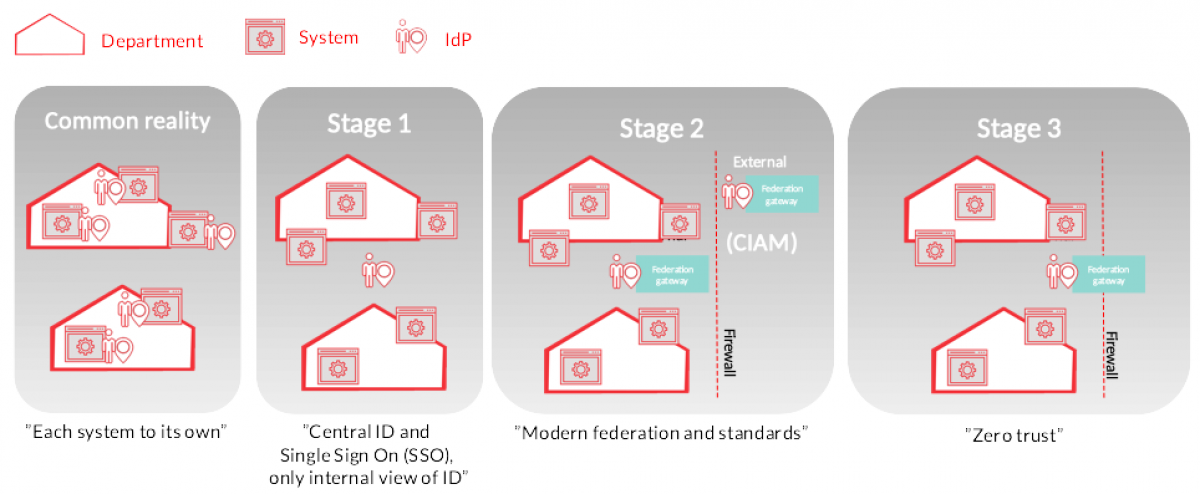
The picture below show some typical stages in the IAM maturity process.

Maturity stages

The 4 steps of IAM maturity

  • Step 1 – Common reality: This is the first step in the IAM maturity process. In these step each system, run by separate departments, have their own identity provider/user store. This means that users/systems are able to access the system if they exist in the local user database and has the right credentials. As there is no integration/access between different user stores, every user has to be created for each system with their own password and login credentials. 
  • Step 2 – SSO: In this step, the organization has implemented a centralized identity provider. This means that as long as the various systems have integrated with this, users only need to exist in one user store and that credentials for various systems are attached to this user. For users this is a significant improvement from step 1, as it makes it possible for them to authenticate with one user id and password for different systems. It also makes it easier for the organization to administer users and credentials across the organization in one place. This is probably also a common IAM maturity level for many organizations. 
  • Step 3 – Modern federation and standards: When reaching this step, the organization has realized that not all users that one has to manage are internal or can be managed through one single IdP instance. A modern organization also has to manage the authentication and authorization of external partners, customers, citizens or other stakeholders. This is often done by federation of the identity and authentication process. This is accieved by deciding to trust selected external IdP’s or user stores. Basically this means that if the user is authenticated by an external trusted source, we also trust that this user or system is who he/she claims to be and granted access in accordance with previously agreed policy. Trusted external sources can for instance be general trusted user stores (like BankID for Sweden), governmental approved IdP’s, trusted partner IdP’s or publicly available user stores like Google, Apple or Facebook. One can decide which privilege's to assign for various user stores dependent on credibility and the latter examples are often given lower access or authorization levels to digital assets given its public nature. 
  • Step 4 – Zero Trust: Zero Trust starts by assuming that any identity – whether human or machine – with access to your applications and systems may have been compromised. The “assume breach” mentality requires vigilance and thus a Zero Trust approach to security. With a Zero Trust approach to identification and authentication, you can let users use various IdP’s, but trust is very limited in time and the identity is always challenged. For your users this approach can both make it easier to work with digital innovation and transformation, as business development is not restricted by identity and security management, but it also requires a very aware strategy for identity management and high level of maturity as to IAM and secrets management, which can be awkward for your users. 


When you know the maturity of your IAM; it is time to think about which aspects of IAM (and its sibling consumer/customer IAM - CIAM), that are applicable and important to you and your organisation!

Introduction to Identity and Access Management (IAM)

Almost all of the businesses and services in our society are nowadays depending on digital services in one way or another. Not only "born digital" or pure digital businesses (such as streaming music, movies or e-books), but also restaurants, mechanical workshops, hairdressers or automotive firms are dependant on digital solutions to run their daily operations. It can be services for bookings, webpages with contact information, ordering systems and mandatory reports to governments.

Not to mention what citizens of the modern society would think of not being able to communicate with governmental agencies, municipalities or other public organisations in a digitized way. In short, without digitization, the modern society would just stop. 

A day without single-sign-on

It used to be that the applications and computing power (servers or cloud environments) providing the digital services was at the centre of it all. With the rapid spread of connectivity, connected systems and services powering automation – the centre of it all is now Integration/APIs and digital identities (please refer to the blogs at https://www.redpill-linpro.com/en/blogs/api-microservices-and-integration for additional reading on this topic).

Why is this? Well… one can always turn to oneself and for a second try to imagine how your day would look like if there was no single-sign-on, forcing you to sign into each and every system you use, every time you want to use it? It would also be literally impossible to interact with your smartphone, tablet or all the apps on your work PC without a digital identity. For your private use case, this identity is often in the shape of an id from Google or Apple. 

This is basically what IAM is all about. Making sure that it is possible to access relevant digital systems and information with a digital user id. This way the system can authenticate you and provide you access to the information you are authorized for. This may sound simple in theory, but of course in real life there are many decisions made by organisations, system owners and other stakeholders before this happens.

Trying to bring the level of detail further, the frameworks (and concepts) for managing digital identities and access to artefacts and information, goes under the name of Identity and Access Management (IAM). Wikipedia states that Identity and Access Management (IAM) “is a framework of policies and technologies to ensure that the right users have the appropriate access to technology resources.”

In the digitized society, this is also expanded to system to system interaction and making sure that each system has access to the right resources in other digitized solutions.

Our colleague, Benneth Christiansson, has put words to this in an episode of our podcast series "IT Talks":

The problem

The actual pains, problems and questions that IAM is targeting, has been described in several posts already. One common use case to describe the challenges that IAM addresses is the “Airport parable” which compares the IAM solution of a digital business with an airport and the traveller logistics from securing the boarding pass (on-boarding, establishing trust), entering security gates, shopping tax-free, boarding air planes, transferring air planes in a different country until finally exiting the “system” at the destination (off-boarding, loosing trust).

One might look upon airports as a series of systems that a passenger is allowed access to as long as he/she has bought a ticket, can prove his/her identity, holds the correct travel documents and concurs to safety and security regulations. If all this is true, the passenger is granted access to the airport system and available service (in accordance with privileges) as long as he/she stays in the system.

Once at the destination and leaving the system, the passenger must go through the same procedure again to be granted access. This is very similar to the journey/lifetime of a digital id/token and the trust given to its holder. 

So in relation to the Airport parable; What is the actual problem that IAM aims to solve? Is it a question about:

  • Identity and authentication?
  • Access and authorization?
  • Cost and resources?
  • Pure security issues?
  • Or is it really “User experience” and simplicity for the consumer?

It is probably all of the above!

Your IAM solution is the most important component when deciding on who, which or what you grant access to your data and services, but also the portal (login), to your systems and therefore the first thing that can “bug” your co-workers and customers if it’s not working – or working poorly. Why is it the most important component? Just ask; “What happens in our organization and with our products/systems if the IAM is removed (either prevents all access between user, customer, systems, integrations, or allowing all access)”?

Just as in the example of the airport – if we are not allowed to enter, then the rest of the services in the entire organization is not interesting at all, but also if it is the other way around and everyone is let in with full access. That will for sure cause a lot of problems...

The IAM maturity and understanding differs a lot between organizations and individuals – but if you haven’t started work on your IAM strategy yet and haven't got this organized, it is really about time now!

Advance your digitization process

To address challenges with Identity and Access Management to allow you and your organisation to advance your digitization process with remained control, we have created the "IAM Ready" model. This model is intended to assist you with mapping your work with IAM in the maturity ladder and help you with specific methods and solutions to challenges you might face in various phases of the process.

In short this can be your tool to create a smooth and structured process to stay in control on who accesses which of your digitized assets, while at the same time keeping this a smooth process for the user/system.

We will introduce the "IAM Ready" model in following blog posts.

Why do you need a Digital Integration Hub?

If you haven’t already, please find my two first blogs in this series, where I introduce and explain the Digital Integration Hub (DIH):

So now we have a very overall idea of what the DIH is, and how it differs from Enterprise Service Buses (ESB) and Integration Platforms as a Service (iPaaS), but why do I want one?

Back in the day, when I took my masters in IT and Administration a well implemented ERP system was recognized as a competitive advantage due to the centralized data and process model. All companies were implementing single instance ERP systems like the SAP suite. This meant that the systems became more and more complex as change and implementation projects grew out of hand.

Since then, most companies have moved from a best of suite to a best of breed thinking when choosing software and have been implementing cloud based SaaS solutions which drives an ever growing need for system integrations. The DIH breaks the linear connection between integration needs and integration effort/cost with the following benefits:

  • Increased agility: A DIH can help organizations quickly respond to changing business requirements by enabling the rapid integration of new applications and data sources.

  • Improved data quality: A DIH can help ensure that data is standardized and consistent across the enterprise, leading to better decision-making.

  • Enhanced security: A DIH can help ensure that data is securely shared and accessed only by authorized users.

  • Reduced costs: A DIH can help reduce the cost and complexity of IT projects by eliminating the need for custom integrations between different systems.

To be honest these benefits sound awfully a lot like the promises of the SOA platforms but there are a few key differences that makes the promises achievable. We always strive for reuse of data and process components when implementing integration. The challenge is that the objects very quickly become use case specific.

So, the customer API that is exposed in a project will contain the data and operations needed for the project solution, but very rarely the complete picture of the customer and even worse often also a few data entities not belonging to the customer domain but needed in the project. With the digital integration hub we modulate the customer API in the persistency layer of the DIH, where we have the complete business model of the customer data entity which can be based on multiple data sources.

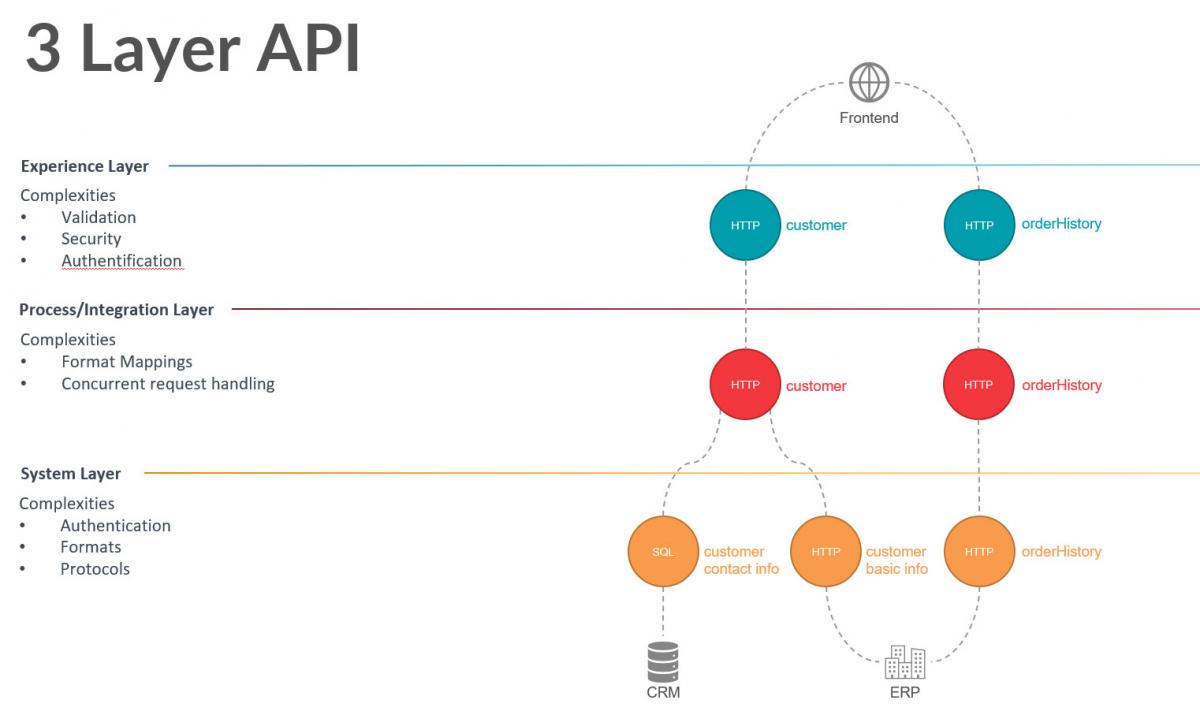
For the specific project we just expose an extra experience API that is use case specific. That means that we create generic data objects in order to freely expose specific APIs – and this is the big difference. So, in essence the DIH enables the three-layer API architecture, but with much more performance and flexibility.

See example figure below:

Digital Integration Hub (DIH)

The power of DIH

My favorite example that shows the power of the DIH is from a current customer. We had implemented a DIH solution, where we combined customer, order and service data into a solution used for a customer portal. Shortly after go-live, the sales team of our DIH customer came and said they could land a huge deal, if we could integrate order and service data into the new customers SAP Plant Maintenance system by calling two APIs exposed by the new customer.

After looking at the data foundation in the DIH we realized that a quick composition of the current data flows, we could provide the needed data in near real time for the customer. This new solution was implemented and live after two days of development and test!!!

If something sounds too good to be true, it probably is. Above case is true, but the DIH comes with challenges that needs to be tackled. 

  • Integration complexity: Implementing a DIH can be complex, as it involves integrating multiple systems and data sources with varying levels of complexity and maturity.

  • Data governance: A DIH requires strong data governance practices to ensure that data does not fall in the hands of non-authorized people.

  • Build or buy: Should you build or buy a DIH platform. No matter what you do, there are challenges in terms of resources, vendor login and the risk of building technical debt.

Support your digital business

Truly the DIH is not an easy implementation, but it still is the best way to support your digital business with data and process objects as the needs arise. Our experience is that it can be done in many ways, and with the right team it does not have to be a huge undertaking. Often we find, that our customers can build upon already existing solutions

What is a Digital Integration Hub?

This blog post is number 2 in my series of defining the heart of your digital business. If you missed the first one check it out here

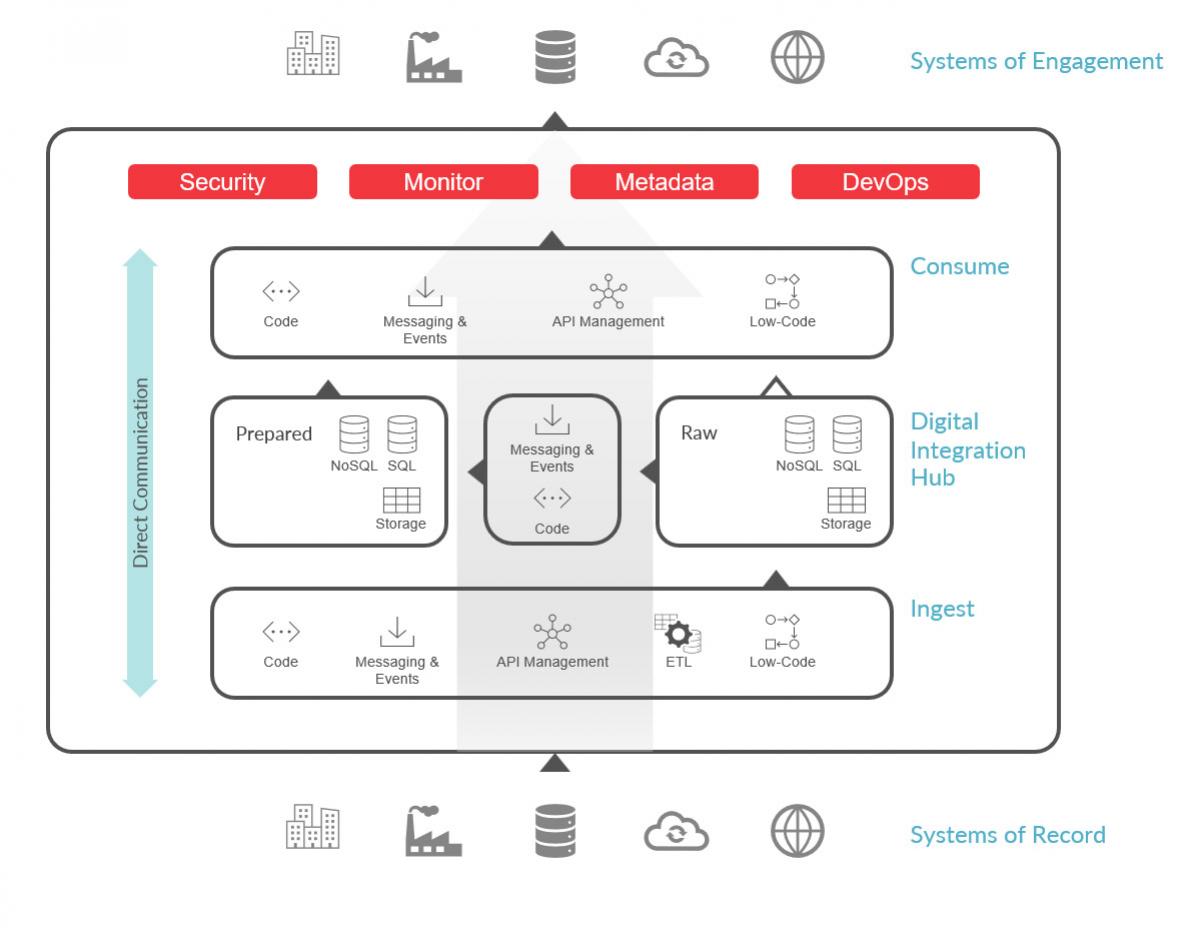
A Digital Integration Hub (DIH) is a platform that allows organizations to connect their various systems, applications, and data sources, enabling seamless data exchange and integration. It acts as a central point for data ingestion, transformation and distribution, providing a unified view of data across the enterprise.

The biggest difference from an Enterprise Service Bus (ESB) or an Integration Platform as a Service (iPaaS) and the Digital Integration Hub (DIH) is the ability to persist, aggregate and combine data for later use and exposure to 3rd party system for instance using APIs, events or classic push of data.

Below is the architecture we usually use to build our DIH:

Digital Integration Hub

Bridging the gap

At its core, a DIH is a middleware layer that bridges the gap between different systems and applications, enabling them to communicate with each other in a standardized way. It provides a set of APIs and connectors that allow organizations to easily integrate new applications and data sources into their existing systems.

A DIH typically includes the following components:

  • Data ingestion: This involves the collection of data from various sources, such as databases, applications, and IoT devices.
  • Data transformation: This involves converting the data into a standardized format so that it can be easily shared and understood by different systems.
  • Data storage: This involves storing data and transactions in either the source format or a prepared format in what is called a process format (more on this in a later post)
  • Data distribution: This involves delivering the data to the appropriate systems, applications, and users.

Increased agility and reduced costs

The digital integration hub can use all or parts of the architecture for specific integration I e, you don’t always need to persist data (although you often would want to).

A DIH can be deployed on-premises or in the cloud, and it can be customized to meet the specific needs of an organization. Some of the key benefits of a DIH include increased agility and implementation speed, reduced costs, improved data quality, and enhanced data governance. With the data in integration storage, you also get the benefits of exposing near realtime data from slow performing systems and at the same time protects the systems of integration request overload.

Next time I will dive into more details of why your business would want to invest in a DIH.

Introducing the Digital Integration Hub – the heart of any digital company

If you're just as lucky as me, you've also tried to stumble upon something that shakes your world and basic truths as the Digital Integration Hub did to me. I've been working professionally with system integration for 20 years and grew up as a strong advocate for the Services Oriented Architecture (SOA) and a firm believer of one platform to rule them all. Meaning that the integration platform should be the central heart where all data, processes and transactions would flow through.

All, never, always

During these years I have diligently fought for three truths:

  1. ALL integrations should be mediated through the integration platform

  2. NEVER store data in the integration platform

  3. ALWAYS keep all business logic in the system of record

A transforming paradigm

All this was challenged by the advent of the Digital Integration Hub, a completely transforming paradigm in the world of system integration, but still containing the best elements from: SOA, API led architecture and 3-Layer integration. 

Why should I care about this, you might ask yourself. I usually say that the integration platform IS the heart of any digital company. A quick google search tells me that both Gartner group and Forbes seem to agree in the reports: "The Integration Platform as the Heart of a Digital Business" by Gartner and "The integration platform is the backbone of a digital business" from Forbes. 

Consequently, a good implementation of a Digital Integration Hub could become the competitive edge that will differentiate your company from the masses. 

During this and the coming blogs I will try to explain what a Digital Integration Hub is, why it should become the heart of your digital business, benefits and challenges and finally the best practices for implementing a Digital Integration Hub.

Becoming integration ready - lesson 4

Choose your integration competence provider with as much intent as you choose your applications and integration platform

The choice of an integration development partner is more important than the choice of integration technology because a good integration development partner can help your business run more efficiently and effectively.  While the choice of technology only will be effective if you are running your business effectively already.

A good integration development partner will be able to provide the tools and expertise you need to create the right integration solution for your business, based on your specific circumstances and strategies. They will have a deep understanding of different integration technologies and will be able to help you choose the right one for your needs.

More profitable operations

Additionally, a good integration development partner will be able to customize the integrations and solutions to meet your specific needs. They will be able to work with you to understand your business requirements and will be able to tailor the integrations to fit your unique needs. This level of customization is important because it can help ensure that the overall solutions including integrations is a good fit for your business and will be able to make your operations more profitable.

Another key benefit of working with a good integration development partner is that they will be able to provide ongoing support and maintenance. Software in general and integration solutions in particular are based on complex and constantly evolving technology, and it's important to have a partner who can help you keep your solutions up to date and running smoothly. A good integration development partner will be able to provide regular updates and patches, as well as help you troubleshoot any issues that arise.

In addition to providing technical expertise and support, a good integration development partner will also be reliable and provide good customer service. This is important because if there are any problems with the integrations or solutions, you need to be able to get help quickly and easily.

Becoming integration ready - choosing the right partner

Overall, choosing the right integration development partner is critical because it will:

  1. help your business run more efficiently and effectively,
  2. be able to provide the tools and expertise you need to create the right software solution for your business, 
  3. be able to provide ongoing support and maintenance to keep the software running smoothly.
  4. help you avoid problems and downtime, and can help ensure that your software is a good fit for your business and its needs, 
  5. save both headaches and money for you and your organization, and
  6. ultimately assist with your business mission, provide flexibility and provide your backbone for digital business innovation.